
Field Guide
Corporate video production
Most corporate video is commissioned by committee, produced by a team that never met the audience, and dies quietly on a careers page. This guide is the opposite of that. It's how a founder-led studio actually runs the process - from the first conversation to the final cut - and why the difference between a film that performs and a film that fills space almost always comes down to who's making the creative decisions.
01 · Definition
What corporate video is
Corporate video production is the planning, shooting, and finishing of film for a business purpose that isn't a straight product ad. That covers a wide field - culture films, employer branding, investor content, internal comms, event coverage, explainer films - and it's exactly that breadth that makes it easy to get wrong. A video made for a careers page is a different object than one made for a boardroom, even if both are "corporate."
The useful question isn't what kind of video do we need. It's what decision do we want someone to make after they watch it. Everything - length, tone, music, whether there's a voiceover at all - flows from that answer. When a corporate film feels generic, it's almost always because nobody answered that question before the cameras rolled.
02 · The process
The production process, step by step
Discovery & strategy
This is a conversation, not a form. What does the business need to happen - more applications to a program, calmer investors, a team that understands a reorg? Who's the single person we're writing this for? What do they already believe, and what should they believe after? The output is a one-page brief that everyone references for the rest of the project. It's the most important document we produce, and it gets written before anyone picks up a camera.
Concept & creative treatment
The strategy becomes a concrete idea: a narrative, a structure, a point of view. A treatment is a short written document - sometimes with reference frames - that describes the film before it exists. This is where good and forgettable corporate videos diverge. A treatment forces the team to commit to a point of view instead of 'covering everything,' which is how you end up with a film that says nothing.
Pre-production
Scripting, storyboarding, casting, location scouting, scheduling, shot lists. The shoot succeeds or fails here, not on the day. For founder-led work this stage is also where the studio earns its keep: the person who pitched the concept is the same person building the shot list, so nothing gets lost in translation between sales and production.
Production - the shoot
Capture the footage. Lighting, sound, direction, performance. Whether it's a half-day on a single location or a multi-day multi-city shoot, the principle is the same: protect the concept. A beautiful shot that doesn't serve the story is a beautiful shot that gets cut.
Post-production
Edit, sound design, color grade, motion graphics, captioning. This is where a pile of footage becomes a film. Sound design in particular is wildly undervalued in corporate work - it's the difference between something that feels finished and something that feels like a deck with music on it.
Delivery & distribution
Deliver in the formats each platform needs - a hero film for the site, vertical cuts for social, captioned versions for silent autoplay. But delivery isn't the end. Distribution is part of the brief: where the film lives, how it's introduced, what happens after someone watches. A great film on an unvisited page is a wasted film.
03 · The formats
Types of corporate films
Corporate film isn't one thing. The three families below overlap, but each has a different job and a different measure of success.

Culture & employer branding
The job: Make someone want to work here.
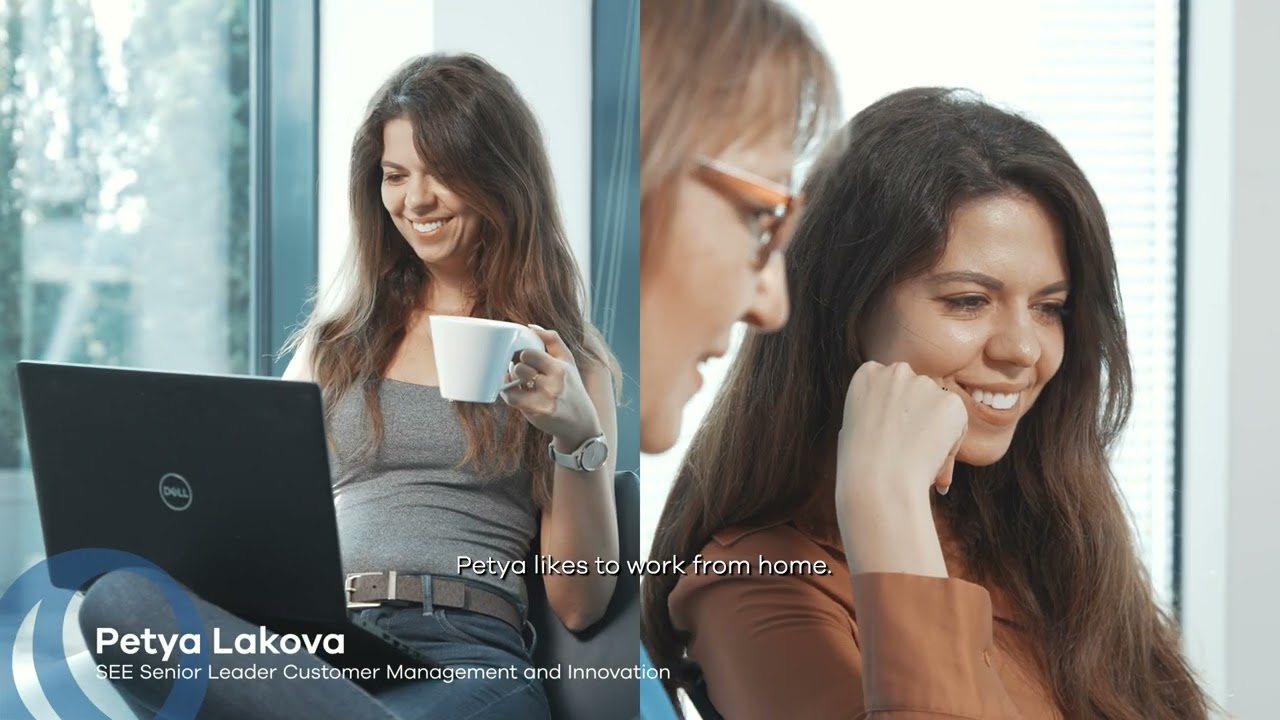
Culture films show what it actually feels like to be inside the company. The honest ones outperform the glossy ones every time - people who are job-hunting have developed a strong allergy to scripted enthusiasm. Real people, real spaces, a real point of view about why the work matters.
Example: Aurubis' Apprentice and Internship program films - made to fill real roles, not to win a creative award.

Internal communications
The job: Make the team understand something.
Reorganizations, new strategy, safety, onboarding. Internal video is judged on clarity, not beauty. The mistake is treating it as lower-craft - a confusing internal film costs the company in exactly the same way a confusing external one does, just on a smaller audience.
Example: Explainers and motion graphics built to get a complex message across to a team in under two minutes.
External & brand
The job: Make the market believe something.
Brand films, investor films, company stories, event coverage. This is the category most prone to vanity. The test is whether someone who isn't paid to care would still watch it. If the answer is no, it's a deck, not a film.
Example: UNIQA's event film and brand commercials; Fortelier's artist documentary series.
Explainer & product film
A focused film that makes one thing - a platform, a feature, a process - click for a specific audience. Nuvei's platform and service explainers are this category: tight, motion-led, built so a buyer finishes the video understanding what the product does.
Event & documentary
Coverage that's cut like a story, not a montage. The Fortelier artist documentaries and the UNIQA event film treat real events as material with a narrative arc, not just footage to set to music.
04 · Returns
The ROI of high-end video
Video ROI gets talked about as if it were one number. It isn't. The return on a culture film is measured in qualified applications and lower cost-per-hire. The return on an explainer is measured in shorter sales cycles and fewer 'can you jump on a call to explain it' emails. The return on a brand film is measured in how long people watch and whether they remember you a week later. Using the wrong metric on the wrong film is how good work gets called a failure.
The honest version of the ROI argument is this: high-end video outperforms low-end video on every metric that isn't 'how cheap was it' - watch time, recall, click-through, conversion, share rate. Cheap video is cheap because it's disposable, and disposable content performs like disposable content. A film that someone actually wants to finish is a film that does work for years, not weeks.
The specific number that matters for your project depends on the job. The right move is to define that number in the discovery stage - before the shoot - and then judge the finished film against it. A studio that can't tell you how they'd measure success on your specific film is a studio that's planning to be gone by the time the results come in.
Do people finish it, or drop off at 8 seconds?
A week later, do they remember your name?
Did they do the thing the film existed for?
05 · The argument
Why boutique, founder-led wins
Large agencies are built to scale throughput, not craft. That means layers: an account team writes down what you said, hands it to a strategist, who briefs a creative, who briefs a producer, who books a director who may be excellent but wasn't in the room when you described the problem. Each handoff is a place where the intent quietly degrades. By the time the film comes back, the thing you asked for has been averaged into something safe.
A founder-led studio collapses those layers. The person who hears the brief is the person who writes the treatment, directs the shoot, and oversees the edit. Nothing gets translated, nothing gets averaged. When the work is good, you know exactly who made it good - and when it isn't, there's one person to talk to about fixing it, not a committee.
That's the real tradeoff, and it's worth being honest about it. A boutique studio has less capacity than an agency, so it takes fewer projects and says no more often. What it gives up in volume it makes up in attention. For a corporate film that's meant to represent the company for years - not a campaign that runs for a month - that trade is usually the right one.
06 · Investment
What it costs
Corporate video pricing is driven by four things: days of shooting, crew size, complexity of post (animation, 3D, sound design), and usage. A single-day shoot with a tight crew and clean edit is a different project than a multi-day shoot with motion graphics across every frame - and both can be the right answer for different goals.
The number that matters isn't the day rate. It's the cost per decision influenced. A film that fills a page and changes no minds is expensive at any price. A film that shortens a sales cycle by a month is cheap. The job of a good studio is to help you find the point where the spend maps to an outcome - not to sell you the biggest package.
Rather than publish a generic price list that fits no real project, the useful thing is to scope yours against your actual goal. Answer a few questions about scope below and we will reply with an offer for your project.
07 · Before you brief
Briefing checklist
If you can answer these seven questions before you talk to any studio, you'll get a better film from whoever you hire - and you'll find out in the first conversation who's actually listening.
- 01What single decision do we want the viewer to make after watching?
- 02Who, specifically, is that viewer? Not a demographic - a person.
- 03What do they currently believe, and what should they believe after?
- 04Where will this film live, and how will people find it?
- 05What does success look like - and can we measure it?
- 06What's the one thing the film must not be?
- 07Who, inside our company, has the authority to say 'this is finished'?
Make one
Ready to make a film that works?
Talk to Rad directly. He'll look at what you're trying to achieve, give you an honest read on whether video is the right move, and if it is - scope it against the outcome that actually matters. No account managers, no template decks.
info@catchygraph.com